Metro 2033 — Civilized Barbarism & You
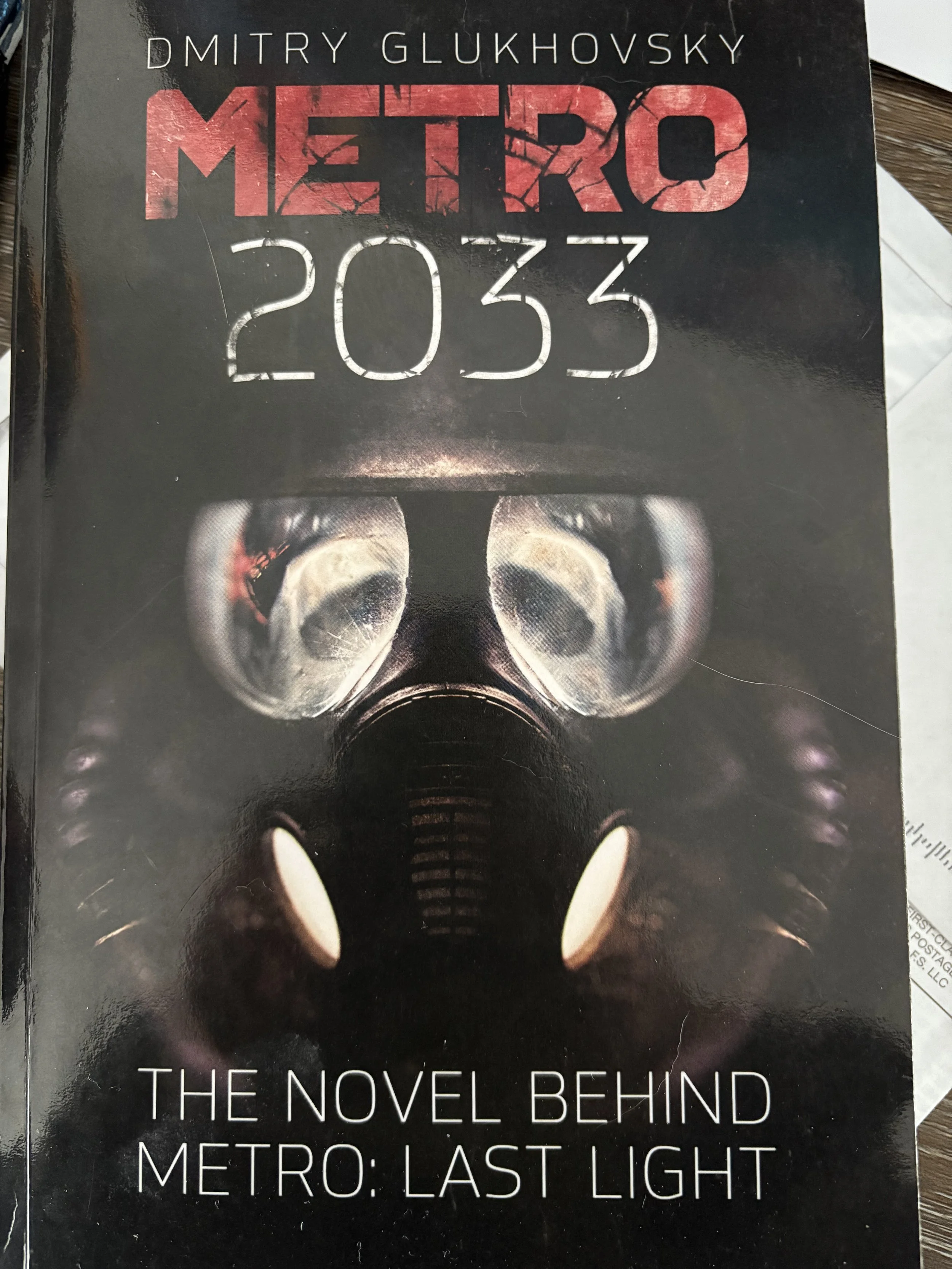
Hey folks, it’s been a bit since I’ve written a proper book rec!
So, I’ve played the Metro games, all of them except for the newest VR release (though it’s on the backlog currently). The Metro books, penned by Dmitry Glukhovsky, focus on the last remnants of humanity and their survival post-nuclear holocaust. To get you up to speed, the world entered WW3 some time before 2013 and it escalated to full-scale nuclear war. The Moscow Metro system, having been built in part as a bunker of sorts, was flooded with civilians when the nukes started falling, and now those civilians eek out a shell of living beneath the earth.
We follow a young man from the VDNKh station, Artyom, as he journeys from his home station to that of the mythic, fortified Polis station. Having been tasked with a quest by the enigmatic stalker (that’s gas-mask and zone-crawling stalker, not the common follows-you-home stalker) Hunter to warn Polis of the threat besieging Artyom’s end of the metro. See, VDKh is directly linked to the botanical gardens and has been dealing with a threat differing from the typical mutant or bandit attacks. No, this threat is intelligent, invasive, and has been driving people into a break-broken sense of madness. These things, dubbed Dark Ones, are slowly encroaching into VDNKh via a left-open security gate (one Artyom himself has some direct responsibility for). So, off he goes!
Artyom’s journey throughout the metro is one of learning, loss, and an ever-looming sense of awe. Humans can’t walk the surfaces anymore, so they’ve turned to making little city-states of the metro’s various lines and stations. There’s the Hansa, a ring running around the core of the system and handling much of the metro’s wealth and supplies. There’s the Red Line, a communist splice of territory right through Hansa’s property with all the joys a communist-era Russian world would bring, and the Nazis, a Russian take on Hitler’s ideas that’s as bad as it sounds.
Artyom must race against time, against fate, and against the Dark Ones themselves to complete his mission, all the while the many splinters of the seething Metro threaten to wash him and his station away. It’s a really good book, one that deals with a whole heap of complex issues and still manages to pull off an engaging story. Now, that being said, I have some minor complains with it. Metro 2033 is hard to read at times, and I’m not quite sure if that’s just how Glukhovsky himself writes or if it’s a result of the book’s translation (Russian and English are not exactly easy to translate between). It makes for some hard to understand moments or sections that feel a little jarring in their transition. But, overall, I love this book. I’m halfway through Metro 2034 now, and will eventually be writing about the video games (and how they compare to the books)!
I find it really interesting how 2033 views the human experience. Artyom is naive, flipping between bitter and hopeful depending on his circumstances. He views the world through a narrow lens, and yet there’s this undercurrent of “what if we were better than this?” that I love about his mindset He doesn’t understand the Reich’s racism, doesn’t believe in the Red Line’s version of communism, but he still hopes that one way or another, the world can be better (even if he is naive and terrified to face his deeper thoughts. There’s a line that Metro Exodus clings to, one I think Artyom as a character embodies fairly well: if not us, then who?
recommended, if you can stick with some occasionally dense or otherwise chunky writing!